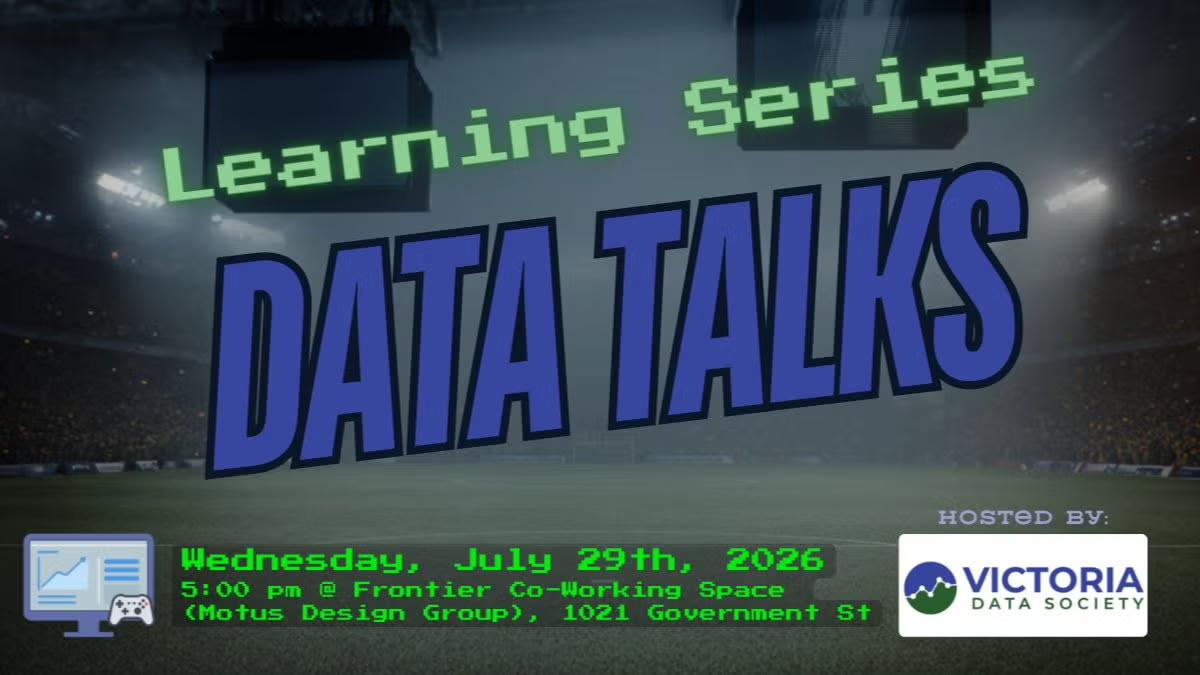
Wednesday, July 29, 2026
5:00 p.m. to 7:00 p.m.
Frontier Co-Working Space, 1021 Government Street, Victoria, BC V8W 1X6 (open in Google Maps) (Motus Design Group)
Free–$10.00
43 Registered, as of Sep 26 19:50
Organizer(s): Victoria Data Society
Hosts: Alyssa Foote on LinkedIn, Elsa Kastrati on LinkedIn
Featuring: Alex Oswald
The Victoria Data Society's Data Talks series turns to video games, an industry that has measured player behaviour at scale for years. Alex Oswald contrasts how the AAA giants run analytics with how indie studios manage on a fraction of the budget, covering player retention, game health, A/B testing, causal analysis, and machine learning. His background spans data roles at Electronic Arts, TinyMob Games, Kixeye, and Kano Apps, and he now runs Savepoint Analytics, a consultancy for indie developers. Pizza and networking from 5:00, the talk at 5:30, networking again from 6:30. Free for Victoria Data Society members, $10 at the door for everyone else.
Anu's Take
Most companies say they are data-driven and mean they own a dashboard nobody opens. Games run the real version, because when the numbers are wrong the players simply leave, and no quarterly narrative will talk them back. The AAA versus indie split is the part worth showing up for: same questions, wildly different budgets, and the small studios cannot buy their way out of thinking.
Want my next pick in your inbox? Email me new events.
Published Thursday, July 16, 2026 by Anu Jolliffe on LinkedIn